“Once you develop to the point where you can observe your thinking process, rather than being it, you can direct your mind, and in doing so begin to take charge of your life.”- Bill Harris
Issue #511 – Monday, January 19, 2026
Have you ever found yourself reaching for something… not because you truly wanted it, but because you wanted to escape?
Maybe it’s food after a stressful day or your phone when you feel lonely.
It might even be a drink, a habit, or a distraction you promised yourself you’d cut back on this year.
If so, I want you to know something important right up front: there is nothing “wrong” with you.
That’s why I want to share today’s Mind Power essay from our Managing Editor, Ryan Standifird.
In this piece, Ryan explains a fascinating and compassionate shift happening in neuroscience.
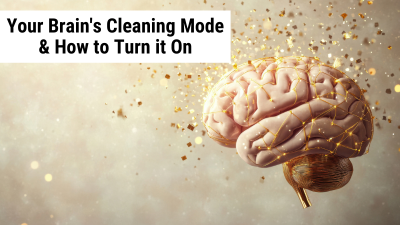
Scientists are discovering that addiction isn’t really about chasing pleasure at all. And there’s a very specific part of the brain involved.
More importantly, Ryan walks you through what this means for real life… and how you can gently break the cycle without shame or force.
This is one of those essays that brings relief simply by reading it. It replaces self-judgment with understanding… and helplessness with choice.
If you or someone you love has ever struggled with a habit that feels hard to shake, I think this will be incredibly eye-opening and hopeful.
You’re going to learn a lot about your brain today. And even more about your capacity to heal.
With care,
Cheers,

MaryEllen Tribby
Centerpointe CEO
P.S.
We have a special tool that gives your brain a major advantage when it comes to freeing yourself from addiction or bad habits.
Scroll down to our Check it Out section below to learn more.
The Part of the Brain Responsible for Addiction
(& What to Do About it)
By Ryan Standifird
All through high school, I’d always been very opposed to smoking.
I ran cross country. I was the captain of the soccer team. So even when I was offered a cigarette at a party or hangout, I’d always say no.
And when I started college, even though I was no longer engaged in sports, I would still refuse to smoke. I made friends who smoked and I’d turn them down time and again when they offered to share during late-night study sessions or frat parties.
But as the year went on, the stress started piling up.
I was trying to do it all - attend all of my classes and do well on tests while also letting loose on my newfound freedom and social life. I was partying every weekend and hanging out with friends late almost every night.
As a result, I came face-to-face with a harsh reality. My grades were suffering. I was showing up to class with minimal sleep and forgetting to do assignments.
And when I also started experiencing drama in my love-life… I figured why not try a cigarette?
It’ll make me feel better, right?
Well, it certainly did. I felt a buzz, a lightheadedness and a sensation that gave me an easy way to forget about my grades, my heartache, and my responsibilities for a couple of minutes.
I didn’t consciously know it at the time, but the part of my brain that processes pain - both physical and emotional - was being numbed.
And according to a recent study, that’s what scientists say is the key ingredient to addiction.
What Part of the Brain Creates an Addiction?
For years, most scientists believed addiction was about chasing pleasure. You try something that feels good - whether it’s alcohol, nicotine, or even scrolling social media - and your brain says, “Hey, that was nice. Let’s do that again.”
But new research from the Scripps Research Institute has flipped that idea on its head.
Addiction, it turns out, isn’t primarily about seeking pleasure… it’s about escaping pain.
Researchers discovered that a tiny region deep in the brain - the paraventricular nucleus of the thalamus, or PVT - becomes hyperactive when the brain learns that something like alcohol or nicotine helps ease pain, stress or withdrawal symptoms.
In other words, the brain starts linking relief with the substance or behavior.
Not “this feels good,” but “this makes the pain stop.”
That small difference changes everything.
Because once the brain learns that connection, the PVT begins lighting up whenever you feel anxious, lonely, or under pressure - essentially begging you to reach for whatever once gave you relief.
And that’s how the vicious cycle begins.
It’s not pleasure that drives addiction. It’s pain avoidance.
Think about how often this plays out in everyday life:
Someone overeats, not because food is so delicious, but because it numbs their anxiety.
Someone scrolls social media for hours, not because it’s truly fun, but because it distracts them from their loneliness.
Someone pours a drink after work, not to celebrate, but to silence the day’s stress.
The habit isn’t random - it’s the brain’s way of protecting you from discomfort.
The problem is, that protection can become a prison.
And once the PVT learns that a certain behavior brings relief, it’s incredibly hard to “unlearn.” In fact, the Scripps study found that animals kept seeking alcohol for their relief even when it caused them distress or required effort or punishment - just like many of us keep repeating patterns that hurt us, even when we know better.
Escaping the Cycle
So what can we do about it?
If addiction is rooted in escaping pain, the way out must involve learning to face that pain - safely, consciously, and compassionately.
That’s where practices like meditation come in.
When you meditate - especially using tools like Holosync, which automatically soothes your “fight or flight” limbic system and your nervous system - you’re retraining your brain to handle discomfort without running from it.
You learn to observe pain, not react to it. To feel stress without reaching for an escape.
Over time, this weakens that hyperactive PVT circuit and strengthens new neural pathways associated with calm, clarity, and choice.
You begin to realize that pain, whether emotional or physical, is temporary. It doesn’t need to control you.
And that’s the key: meditation creates awareness, and awareness creates choice.
The moment you can notice your craving, your stress, or your impulse without acting on it, you’ve reclaimed your power.
You’re no longer a passenger in your brain’s reward system - you’re the driver.
My Personal Experience
I’m proud to say that I’ve been nicotine-free for over four years now!
But it took almost 13 years and dozens of tries to quit before I was finally able to break that addiction for good.
What made the difference?
I used Holosync.
Specifically, the Holosync-powered Breaking the Cycle Suite, which is designed to help soothe the parts of the brain associated with addiction (like the PVT).
You can learn more about Breaking the Cycle right here.
Not only have I been able to save a ton of money by kicking my nicotine habit, but I’m also healthier, my mood is more stable, and I’m able to provide a better environment to raise my kids in.
And if you’re struggling with an addiction, please know that you can turn things around.
Your brain is plastic. It can change. Those circuits that once trapped you can be rewired.
The key is to foster that awareness and realize that you have a choice.
Every time you choose to sit with discomfort instead of running from it, you’re teaching your brain a new way to find peace - one that doesn’t depend on anything outside of you.
It’s not easy. But eventually, it passes.
And that’s where true freedom begins.
Check It Out!
Breaking the Cycle Suite

No one is immune from bad habits and addiction.
As a matter of fact, every addiction started out as “just a bad habit.”
That’s why we created Breaking the Cycle - a powerful Holosync collection that is designed specifically to tackle addictive behaviors before they spin out of control.
And if you’re already stuck in a vicious cycle of addiction, our Holosync technology will empower you to break free!
From internet addiction to substance abuse, this powerful tool will help you conquer any counterproductive behaviors that are getting in the way of living a healthy, happy, fulfilling life.
It’s an investment that the whole family will benefit from for years to come.
Wise Words
“It’s not pleasure that drives addiction. It’s pain avoidance.”
- Ryan Standifird
This Really Happened
"So far, I’ve used Holosync for only a week, but I’m so much more laid back and relaxed. My family wonders what’s happening to me! I’m grateful for Holosync and what you’ve done."
—Sara
Holosync User
We Want to Hear From You!
What if you or a loved one could conquer addiction?
Post your story on our Facebook Page.
Not on Facebook? Tell me about the impact that meditation with Holosync has had on your daily life. Stress? Sleep? Weight Loss? Focus? Spiritual Connection? Other?
Email your story here:
Find Us On Facebook
Post your story on our Facebook Page.
Not On Facebook?
Email Us!
Pay It Forward:
Your story may profoundly affect the life of a person you never meet,
but who will be forever grateful.