Issue #539 – Monday, August 3, 2026
📬 In This Issue:
🧠 The strange science of restless, flat evenings and the name for that feeling
🤯 5 small ways to fight the fade, starting tonight
🗝️ New on Brains 'R' Us: who's really pulling your strings?
✍️ The quote that flips the free-time question
📣 How do you listen to your Holosync sessions?
🧠The Big Idea
Estimated Read Time: 4 Minutes
When Your Free Time Stops Feeling Free
The Science Behind Feeling Flat, and the 3 Habits That Reverse It
By Ryan Standifird
If you've been reading Mind Power for a while, you know about my sacred window each night — the couple of hours before bed after I put the boys down. It's the only time of day that's truly mine.
Usually, I'll fire up a video game or do some writing.
But every now and then, I hit a strange kind of night. I'm restless... but I don't have the mental energy to actually dive into a game or jump on the keyboard. I'm bored, but somehow overwhelmed. I want a break, but doing nothing feels like wasting my time.
So I scroll. I flip through shows without even choosing one to watch. And here's the weirdest part:
I'm not even enjoying it.
Have you ever felt that way?
This Strange Feeling Has a Name
For me, that feeling is a passing visitor. A night here, a night there, usually at the tail end of a long day at work.
But for a lot of people, it isn't visiting anymore.
It moved in.
Researchers have a name for that state: languishing (sometimes called the Slow Dim).
Sociologist Corey Keyes coined the term languishing back in 2002 to describe something tricky: the absence of well-being. It's not depression — nothing is clinically wrong. You're functioning. Going to work, feeding the kids, answering the texts.
But life isn’t humming. The check engine light is on.
And languishing is everywhere. In February 2026, researchers at the University of Illinois — with Keyes himself on the team — surveyed 2,000 American workers.
61% were languishing at work! Only 39% were flourishing.
Even more striking? It showed up across every age, income, gender, and region they measured. There is no "at-risk group."
But is languishing really a big deal?
Keyes's earlier research followed 1,723 adults over a full decade. Those who were languishing at the start had a much higher risk of depression and anxiety years later. So no — this feeling isn't harmless.
But that same study held a surprise: half of the people languishing at the start had climbed out ten years later. And even a modest rise in well-being cut the risk of future mental illness nearly in half.
In other words... languishing is a state, not a sentence.
What the Flourishers Do Differently
So what separates the flourishers from the languishers?
That's exactly what the Illinois team wanted to know. They examined 17 different ways people respond to stress... and found just three habits that consistently set the flourishers apart.
They call them the 3 Rs.
Reframe. When something goes wrong, flourishers hunt for the silver lining — 55% of them actively look for a new perspective in tough situations, compared to just 38% of languishers.
Reach Out. When stress hits, languishers tend to withdraw. Flourishers do the opposite: 68% connect with someone they trust, versus 50% of languishers.
Reset. Flourishers take real breaks. They step outside. They move their bodies. They meditate. Not doomscrolling breaks... actual mental resets.
Notice what's not on that list?
Waiting until you feel motivated.
That's the trap of languishing — waiting for the spark to come back before doing the things that create it. But the feeling follows the action, not the other way around.
And the researchers were clear about one thing: the 3 Rs are learnable behaviors. Skills you can start practicing tonight.
What the Fire Really Looks Like
So here's what it all comes down to.
Those strange, restless evenings are worth paying attention to. Not with fear or guilt or alarm… but with awareness. Because a feeling with a name is a feeling you can work with.
And if you ever forget what the other end of the spectrum looks like, borrow my trick:
Watch a child do something they love.
It's been unusually hot here in Oregon this summer. So most weekends I’ve been spending time with my 3-year-old and 1-year-old boys, Jack and Mylo, out back in the kiddie pool with a fleet of sea animal toys. They'll play together (lately without much fighting, which is a miracle) for up to an hour straight. Locked in. Splashing. Genuinely thrilled about a plastic shark. Living in the moment. Pure joy on their faces.
They’re flourishing!
Nobody had to teach them that. That full-wattage feeling is factory-installed... and it's still in you, too.
It may not come back all at once. It comes back one reframe, one reach-out, one real reset at a time.
Remember, that inner fire's not out.
It's just waiting for you to feed it.
💡Check it Out!
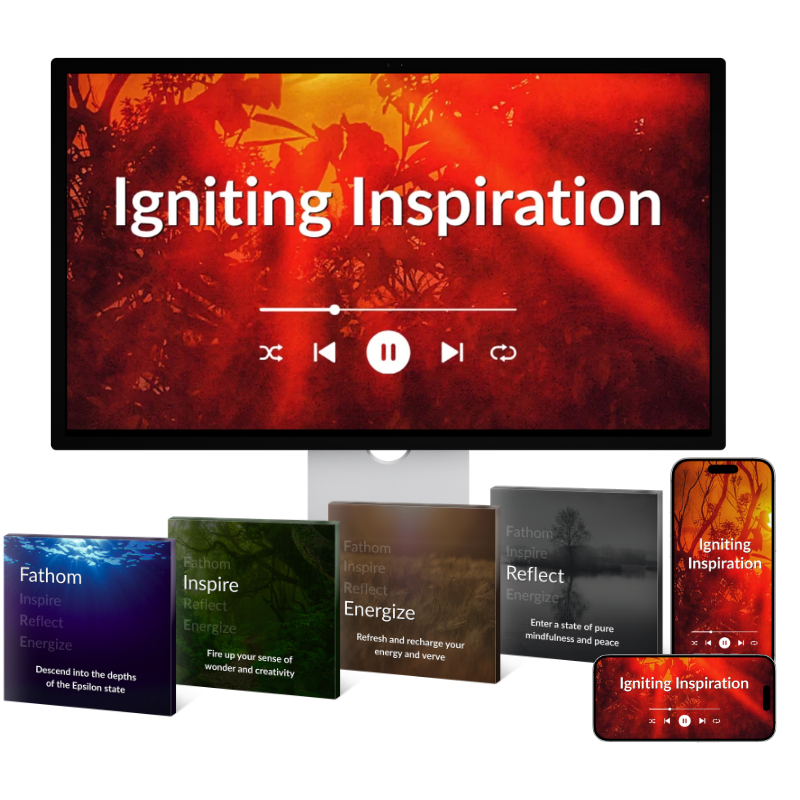
Igniting Inspiration
Leave Your Limits Behind
Is languishing something you’ve been struggling with?
Marc Gilson has spent 30 years designing Holosync soundtracks and coaching people through the slow dim. So, he distilled all of it into four all-new 30-minute tracks named for the states that feed your inner fire: Fathom, Inspire, Reflect and Energize.
AKA - F.I.R.E.
The suite helps create the brainwave states that cause your inner fire to reignite, so you spend less time languishing and more time thriving.
You’re going to love it.
🤯Hack-Worthy
5 Small Ways to Fight the Fade
Name it. The next time a restless-tired evening hits, say to yourself: "This might be a little languishing." Putting a name on a vague feeling is the first step to working with it instead of drifting in it.
Do one reframe rep. Take today's most frustrating moment and find one honest silver lining. It'll feel forced at first — that's normal. Reframing is a muscle, and flourishers train it.
Reach out small. Text or call one person you actually like. Not a comment, not a post — a person. Connection is the flourisher's go-to stress response, and it works in doses as small as one message.
Reset with your feet. Five minutes outside, phone in your pocket. Stepping out and moving your body are the two most common "real breaks" flourishers take.
Trade one scroll for one spark. Swap 30 minutes of passive screen time for something with your hands or your people — cook something, sketch something, play something, call someone. Active free time is what flourishing looks like on a Tuesday night.
🗝️Insiders Only
Listen to the Most Recent Brains ‘R’ Us Podcast
Don’t Be a Puppet on a String:
How to Take Control of Your Life
Listen Now:

🤣Meditation Meme of the Week

✍️ Forwarded by: MaryEllen
"Don't ask what the world needs. Ask what makes you come alive, and go do it. Because what the world needs is people who have come alive." — Howard Thurman
I thought of this quote the moment I read Ryan's essay.
We spend so much energy asking what we should do with our free time. But as Thurman says, a better question is: what makes me come alive?
Your answer might be gardening. It might be calling your grandkids. It might be 30 quiet minutes with your headphones on.
Whatever it is, that's the thing to feed this week.
🎤 MaryEllen's Mic Drop
Lorem Ipsum
Lorem Ipsum
📣 Your Opinion Matters!
How do you listen to your Holosync sessions?
Post your story on our Facebook Page.
Not on Facebook? Tell me about the impact that meditation with Holosync has had on your daily life. Stress? Sleep? Weight Loss? Focus? Spiritual Connection? Other?
Email your story here:
Find Us On Facebook
Post your story on our Facebook Page.
Not On Facebook?
Email Us!
Pay It Forward:
Your story may profoundly affect the life of a person you never meet,
but who will be forever grateful.