Issue #543
📬 In This Issue:
🧠 A foster kid who became CEO & the two sentences that got him there
✍️ Who your Mae Morse was, and who you could be that for
⏱️ A 60-second reset you say out loud, then send to one person
🎛️ What Holosync does with the stuff that got wired in before you had words for it
🧠The Big Idea
Estimated Read Time: 4 Minutes
You Are Worthwhile
By Bill Harris
"You are worthwhile."
"You are full of promise."
I want to tell you about a friend of mine, Bob Danzig. Just spending time with Bob leaves you feeling good about yourself. I think you'll see why.
Meet Bob
For twenty years, Bob was CEO of the entire Hearst Newspaper Group, a multi-billion dollar company, working his way up from office boy at a small newspaper in Albany, New York.
Bob never had a family. Instead, he grew up in a series of foster homes. In one home, he slept in an attic with no lights. The family he lived with would leave his dinner on the bottom step of the attic stairs. He ate in the attic, alone, in the dark.
For his entire childhood Bob owned one pair of much-too-large scuffed black sneakers that he grew into over several years by taking out bits of the tissue paper stuffed in the toes as his feet grew. His other possessions consisted of two shirts, two pairs of jeans, two pairs of socks, and two pairs of underwear.
"When I had to move to a new foster home," Bob said, "I would reach under my mattress, take out the folded black plastic trash bag I kept there, put my clothes in it, and move to a new home."
No one ever took Bob to the beach. No one took him fishing. He never had a baseball card collection. His few friendships didn't last because he never lived in one place for very long. And at sixteen, he had to leave the foster care system and was totally on his own.
Can you imagine what this was like? Never having a family, never doing what normal kids do, moving from place to place whenever a family couldn't keep him or didn't want him, never staying long enough to create a close connection with anyone?
The Two Phrases That Changed Bob's Life
One incident from those years never left him, and he still talks about it.
Mae Morse, the social worker who met with him periodically and who would send him on to his next foster home when his foster family "didn't want him anymore," said something to Bob that changed his life forever.
At the end of each of their meetings, she would take his hands in hers and say,
"Bobby, don't you ever forget this. You are worthwhile."
Here's how he described his reaction in his book, Conversations With Bobby:
"Just like that, she uttered such a simple, pure sentence. But the funny thing is, the reason I remember it so vividly is because I know she meant it. I could tell she was genuine and sincere. She had no motive for saying what she did. I had nothing to offer, she had nothing to gain. I was worthwhile—not because I would shine shoes. I was worthwhile—not because I would carry coal. I was worthwhile—not because I would make no trouble. Just me, I mattered."
This, he said, was like "warm milk pouring over me, the idea that I had some sense of possibility and promise."
Years later, a few months into that first job as an office boy, the office manager called him into her office. "I've been watching you," she said.
Oh, no. Fired, he thought.
But she continued, "And I just wanted to tell you that I believe that you are filled with promise."
This had such a powerful effect on him that even after he became publisher of that newspaper, and even after he became head of the entire Hearst newspaper group, he never stopped hearing those words.
Bob's Big Lesson
Long after he'd become a publisher, Bob tracked down Mae Morse. She was in a nursing home, old and frail. Here's how he described their meeting:
"She beamed when I walked in. I can see her so clearly, her knit shawl hung over her shoulders. I walked over to her and put my hands in hers. Before I could utter a word, she said to me, 'Didn't I always tell you that you are worthwhile?' I said to her, 'In a life stuck in the shadows, you, Mae Morse, gave me my first shining moment that penetrated the darkness.'"
Other than the fact that Bob's story is so touching, there's another reason why I'm telling it to you.
Somehow, out of my own painful childhood and my struggles to master my anger and depression and lack of success, hundreds of thousands of people now look up to me for help and seek my guidance.
Believe me, in light of where I started and the person I used to be, no one is more surprised about this turn of events than I am.
Many people tell me they've had "ah-ha's" from the information I share. It's obvious, however, that what I teach is more theoretical and informational than inspirational.
So as we all do our best to navigate our way through life, I want to express to you something a little more heartfelt… something I've unfortunately failed to say as often, or as directly, as perhaps I should:
I value you.
Even though I may never meet you in person, I'm glad that you're in my life.
You are worthwhile.
You are filled with promise.
Everything I do at Centerpointe is based upon the premise that anyone, if they know what to do, can be happy, peaceful inside, and successful, regardless of their past or present circumstances. If I can do it, anyone can.
So I want to express my hope that Holosync, along with all the other tools we provide at Centerpointe, will in some small way make it easier for you to bring forth the promise that is in you.
Be well.
-Bill
💡Check it Out!
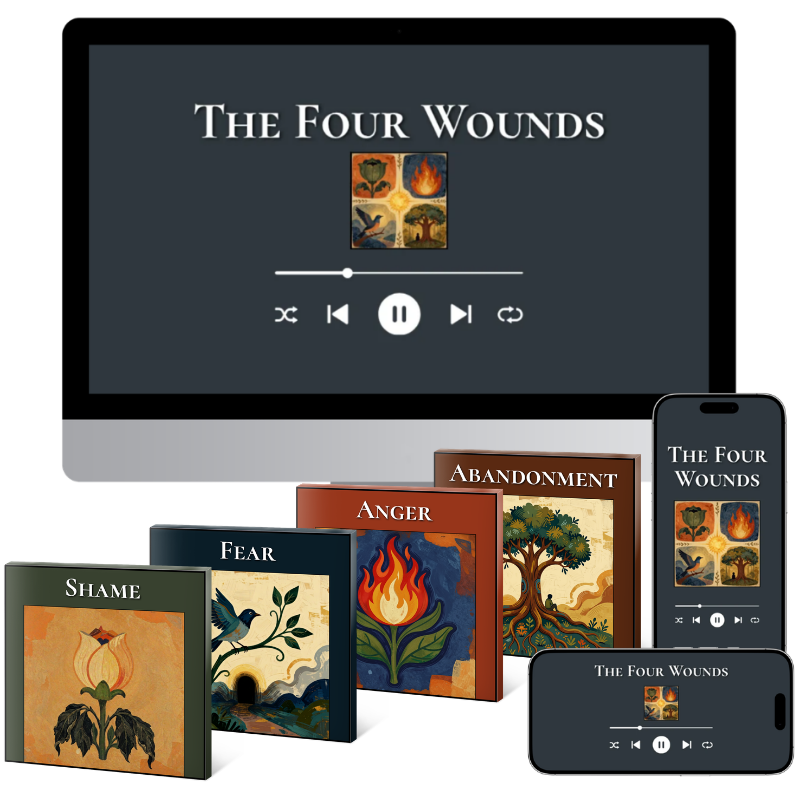
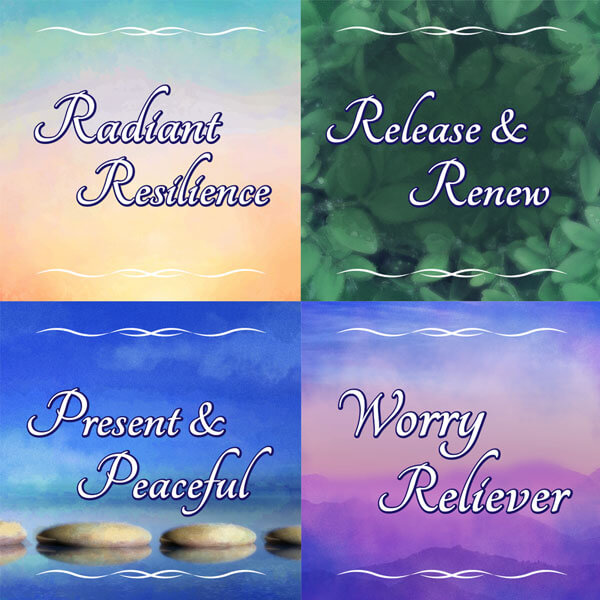
The Four Wounds Holosync Suite
The Four Wounds is a suite of four precisely engineered Holosync soundtracks. One for each wound. Each track is built with the neuro-audio technology Centerpointe has refined over three decades: Holosync, Autofonix affirmations and Lateral Carrier Boost 2.0.
Each soundtrack guides your brain into the exact states where these wounds actually live, so you can finally meet what you've been carrying and let it go. Guided journal pages for each wound are included to support your listening.
Because you are worthwhile. The Four Wounds helps you start to believe it.
✍️ Forwarded by: MaryEllen
Who Was Your Mae Morse?
I've read Bill's story about Bob Danzig more than once. It gets me every time.
Not the part about the CEO. The part about the attic.
A boy eating dinner alone in the dark, and a woman who took his hands and told him he mattered. No agenda. Nothing to gain. She just meant it.
Here's what I keep coming back to. Mae Morse didn't fix Bob's circumstances. She couldn't. He still went to the next foster home with his trash bag. What she gave him was smaller than that… and somehow bigger.
So I want to ask you something.
Who was your Mae Morse?
Maybe it was a teacher. A grandmother. A coach who gave a pep talk you've never forgotten. Most of us have someone. And most of us have never told them what it meant.
Now the harder question.
Who are you being that for?
You don't have to be a social worker. You just have to mean it. A grandchild. A neighbor. The young woman who bags your groceries and looks like she's had a rough week. One sentence, said like you mean it, can outlast almost everything else you'll ever say.
Bill ended his essay with the words he wished he'd said more often. I'll borrow them, because I mean them too.
You are worthwhile.
Now go say it to someone.
-ME
⏱️ 60 Second Reset
Say It, Then Send It
Sit up. Put one hand over the other, the way Mae Morse did with Bob's. Say out loud, slowly, not in your head:
"I am worthwhile."
"I am filled with promise."
Notice what your body does. Some people feel warmth. Some people feel resistance. Both are information, and both are fine.
Now pick up your phone and send those same two sentences to one person. Change the "I" to "you." Don't explain. Don't add a smiley face. Just send it and put the phone down.
That's the reset. One minute, two people, no darkness left in the attic.
🔊 Marc’s Sound Lab
The Wiring Before the Words
Bill's line jumped out at me this week: anyone can get there, regardless of their past or present circumstances.
Here's the neuroscience behind why that's true, and why it isn't easy.
Most of what shapes how we feel about ourselves got wired in early, before we had language for it. A kid eating dinner alone in an attic doesn't think "I am unworthy." He just feels it, and the feeling gets stored in the body and the deeper structures of the brain, not in the parts that reason and argue. That's why you can't talk yourself out of it. The belief lives below the level of words.
That's also the part of the brain Holosync goes to work on.
As the soundtracks carry you into slower brainwave states, the thinking mind quiets and that older material can surface, get felt through and release. Not by force. By repetition. Over weeks and months, the nervous system learns a different baseline. Listeners tell me the old story doesn't disappear so much as lose its grip.
You might “know” you’re worthwhile. But Holosync gives your brain the conditions to actually believe it.
-Marc
📣 Your Opinion Matters!
If you could hear one thing from someone you trust, which would mean the most to you?
Post your story on our Facebook Page.
Not on Facebook? Tell me about the impact that meditation with Holosync has had on your daily life. Stress? Sleep? Weight Loss? Focus? Spiritual Connection? Other?
Email your story here:
Find Us On Facebook
Post your story on our Facebook Page.
Not On Facebook?
Email Us!
Pay It Forward:
Your story may profoundly affect the life of a person you never meet,
but who will be forever grateful.