Issue #542 – Monday, August 24, 2026
📬 In This Issue:
🧠 The four invisible wounds shaping your life from the shadows
🤯 Five ways to loosen a wound's grip this week
💡Your last chance to save on your own healing
🎤 MaryEllen on what awareness is (and what it isn't)
🤔 The Nobel-connected study that found stress ages your cells
🧠The Big Idea
Estimated Read Time: 4 Minutes
You Can’t Heal What You Can’t See
The Four Invisible Wounds Shaping Your Life From the Shadows
By Ryan Standifird
We had a CoachingCast last week that really hit home for me.
It was called From Heaviness to Hope: How to Heal the Four Wounds That Shape Our Lives. My role in these live events is to monitor the chat and answer questions while Marc and MaryEllen engage the community in a deep discussion.
But it only took a couple of minutes into the presentation before I stopped being a moderator and became a student.
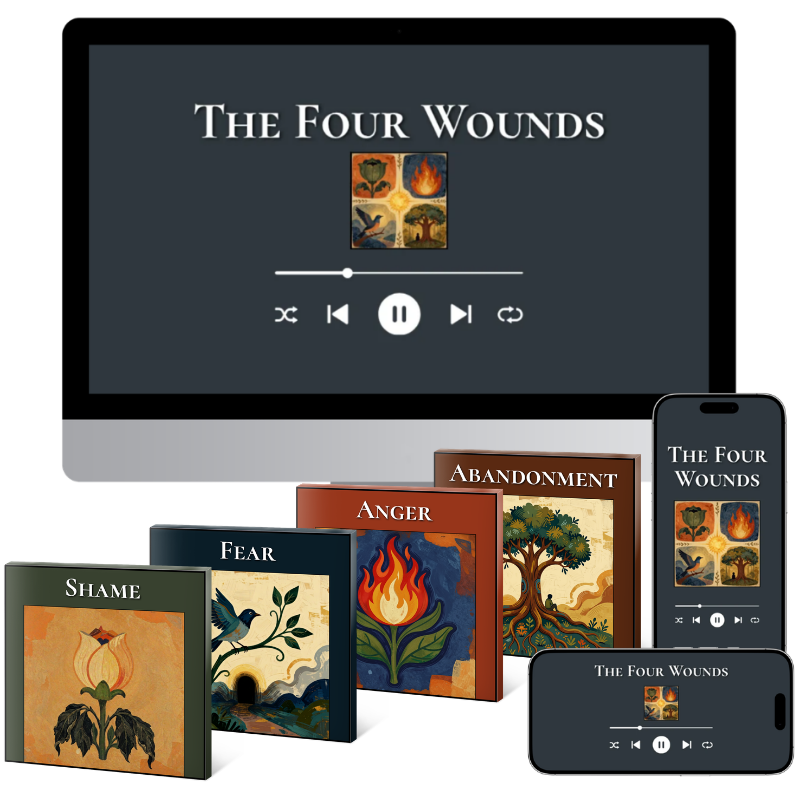
Because as Marc began leading the audience through the dark caves that he calls the four core wounds — shame, fear, anger, and abandonment…
I started recognizing them.
Not in the chat.
In myself.
Four Wounds, One Life (Mine)
The shame? That one traces back to a DUI during my rebellious 20s. It's been many years... and I've built a very different life since then. But that old scar still guides many of the decisions I make today.
The fear? For me, it’s chronic and financial. A low hum in the background of my life. And lately, with rising gas prices, childcare, groceries, even changes to how my student loan payments get calculated… this fear has been getting louder and louder.
The anger? I'm a father of two young boys who are still learning where their boundaries are. Some days they test every single one. And some days I feel that heat rise faster than I'd like to admit.
And abandonment? An old broken heart from long ago left a scar I'd nearly forgotten... until it resurfaces during the inevitable argument with my wife. Suddenly a disagreement at the end of a long day feels like something much bigger. That's not the argument talking. That's the wound.
Here's the thing. I consider myself a happy guy. A little tired from juggling the kids, a career and all the responsibilities that come with it, sure. But I’m happy, hopeful and confident.
So if I can feel these four wounds this easily... what about the people who weren't as lucky as me? The ones carrying heavier versions of these same wounds, with fewer soft places to land?
That question stayed with me long after the call was over.
What a Wound Actually Is
Marc described an emotional wound as pain that never got fully processed. Instead of moving through us the way feelings are supposed to, it gets stuck — embedded in the nervous system, often below conscious awareness.
And the science backs this up.
In a famous study at UCLA, psychologist Naomi Eisenberger and her colleagues scanned people's brains while they played a simple ball-tossing video game. Partway through, the other "players" (secretly just a computer program) stopped passing them the ball.
They were being left out. Rejected.
The result? The anterior cingulate cortex, a brain region that registers physical pain, lit up. And the more rejected people felt, the more active it became.
In other words, emotional pain isn't "all in your head." It runs on some of the same brain circuitry as physical pain. A wound really is a wound.
But here's where the hope comes in.
In another UCLA study, psychologist Matthew Lieberman found that when people simply named the emotion in front of them — "angry," "afraid" — the amygdala, the brain's alarm center, calmed down... while the thoughtful prefrontal cortex switched on. Lieberman compared it to hitting the brakes on your emotional reactions.
Pretty impressive, right? Just putting a feeling into words begins to settle the brain.
Pulling Strings from the Shadows
That's what struck me most during the CoachingCast.
These wounds weren’t obvious until I really traced it all back. They work invisibly, from the background — pulling strings on our decisions, our relationships, our self-talk — while we stand there wondering why we keep reacting the way we do.
You can't heal what you aren’t aware of.
But the moment you become aware of a wound — the moment you can look at a reaction and say, "That's shame talking," or "There's that old fear again" — something shifts.
The string becomes visible.
And a visible string can be loosened.
That's why Bill Harris, Centerpointe’s late Founder, always stressed the importance of awareness. Here’s one of my favorite quotes from Bill:
“Awareness is the solution to everything that has a solution. It's also the solution to knowing what has a solution—and what doesn't.”
When it comes to the Four Wounds, naming the wound is the first act of healing it.
From Heaviness to Hope
Marc opened his presentation with the word "heavy," and he wasn't wrong. This stuff is heavy.
But he ended with hope. And after sitting with it all week, I understand why.
These four wounds are universal. Shame, fear, anger, abandonment — if you're human, you're carrying at least one. I'm carrying some version of all four... and I'd still call myself a happy man.
The heaviness isn't a life sentence. It's a signal. And awareness is what turns that signal from a puppeteer's string into a thread you can follow — all the way back to where the pain began.
That's where healing starts.
It’s not always easy. But it’s worth it.
💡Check it Out!
Product Name
Lorem Ipsum
🤯Hack-Worthy
Five ways to work with the four wounds.
1. Name It to Tame It
The next time a strong emotion hits, pause and label it. Out loud or silently. "This is shame." "This is fear." Be specific. Putting a feeling into words calms the amygdala and hands the wheel back to your thinking brain.
2. Trace the String
When a reaction feels bigger than the moment deserves, ask yourself: "Which wound is this? Shame, fear, anger or abandonment?” You don't have to fix anything yet. Just tracing the reaction back to its source loosens its grip.
3. Put It on Paper
Spend five minutes writing about a moment when one of the four wounds showed up this week. What triggered it? What did it feel like in your body? Research on expressive writing shows that translating emotional experiences into written words delivers real mental and physical health benefits.
4. Breathe Your Way to Safety
Fear's antidote is a felt sense of safety, and the fastest way to signal safety to your nervous system is through your breath. Empty your lungs, inhale slowly for a count of four, hold for a moment, then blow it all out through your mouth. One intentional breath tells your brain: no danger here.
5. Meditate on It
Awareness is a muscle, and meditation is how you train it. A regular practice makes it easier to catch a wound in the act. To see the string before it pulls you. If you want the deep end of that pool, Holosync takes your brain into the slow, restorative brainwave states where old, stuck material can finally surface and release. It's the most direct route to the kind of awareness Bill was talking about.
🎤 MaryEllen's Mic Drop
Here's something I want to be clear about, because it matters.
Looking at your wounds is not the same as wallowing in them.
Some people worry that naming their shame or their old fear means dwelling on the past. Feeling sorry for themselves. Picking at a scab.
It's the opposite.
Wallowing is what a wound does when it runs unseen. The looping thoughts, the overreactions, the same argument for the fifteenth time... that's the wound in charge.
Awareness is you taking back control.
You look at the wound once, clearly, with some compassion for yourself. And then something interesting happens. It gets quieter. Not because you fought it. But because you finally saw it.
That's not dwelling on the past. That's how you stop the past from dwelling in you.
-ME
Watch the CoachingCast Replay!
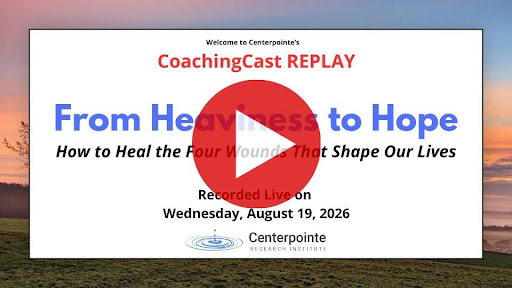
Missed the CoachingCast that inspired this week's essay?
From Heaviness to Hope: How to Heal the Four Wounds That Shape Our Lives is the live event where Marc walked our community through shame, fear, anger and abandonment... and the antidote to each one.
Find Us On Facebook
Post your story on our Facebook Page.
Not On Facebook?
Email Us!
Pay It Forward:
Your story may profoundly affect the life of a person you never meet,
but who will be forever grateful.